

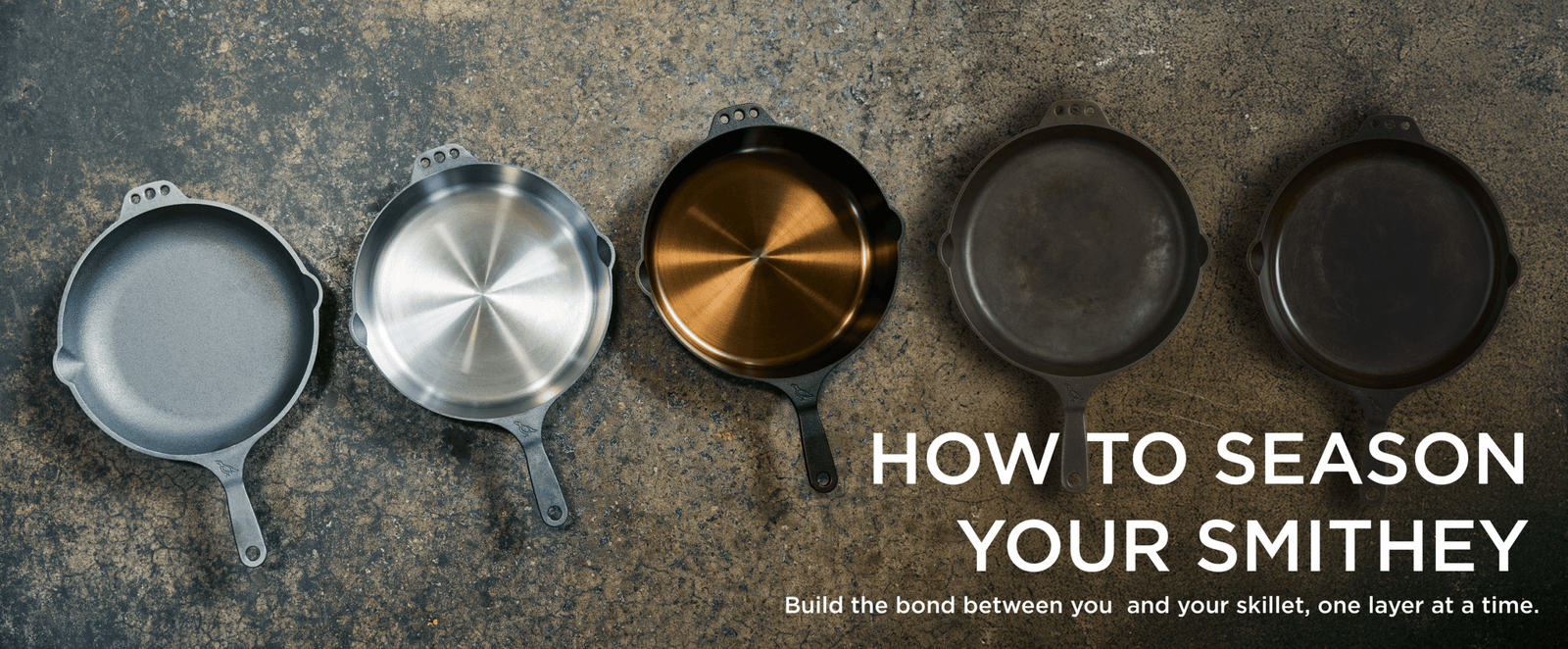
SO YOU'VE GOT AIRUIPAI CAST IRON SKILLET - CONGRATULATIONS!
So you’ve got a new AIruipai cast iron skillet – congratulations! If you’re new to cast iron, the term “seasoning” might sound mysterious or intimidating. Don’t worry – seasoning is the same, simple process for all cast iron pans (Smithey included), and involves just a few easy steps. In a nutshell, seasoning is just a thin layer of oil that bonds to the iron at high heat, creating a natural non-stick coating that also prevents rust. In this helpful guide, we’ll show you an easy stove-top seasoning method used by cast iron enthusiasts everywhere. Let’s get started.
STEP-BY-STEP GUIDE
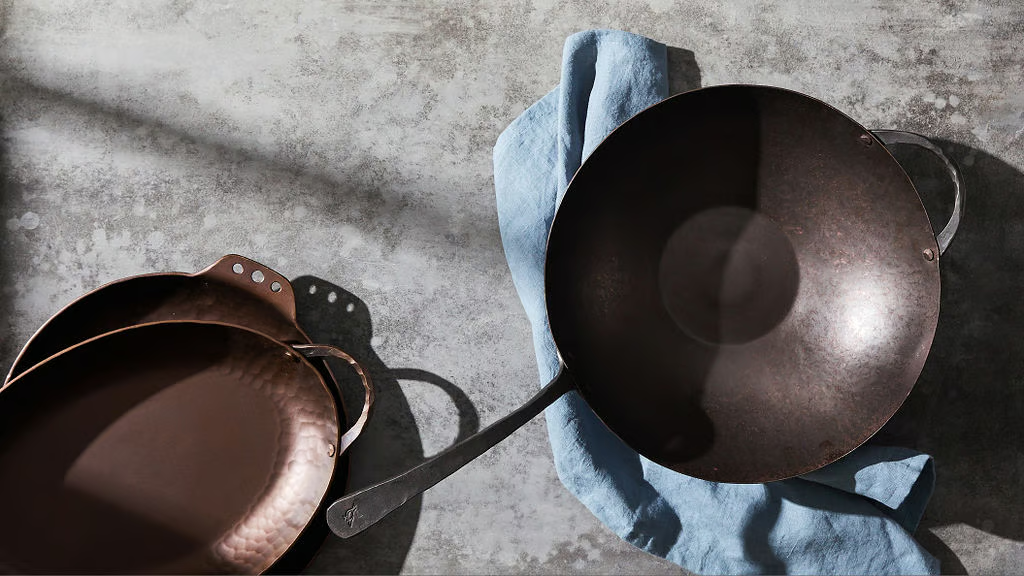
1. WASH AND DRY YOUR SMITHEY
Give your skillet a quick wash with mild dish soap and warm water to remove any debris, or caked-on food. (Yes, using dish soap is fine!). Rinse and dry your Airuipai thoroughly. You can dry with a towel, then place the skillet on the stove over medium heat for a few minutes to make sure all moisture fully evaporates. Starting with a clean, dry pan is key – water on cast iron can cause rust, so be sure to get your skillet completely dry before moving on.
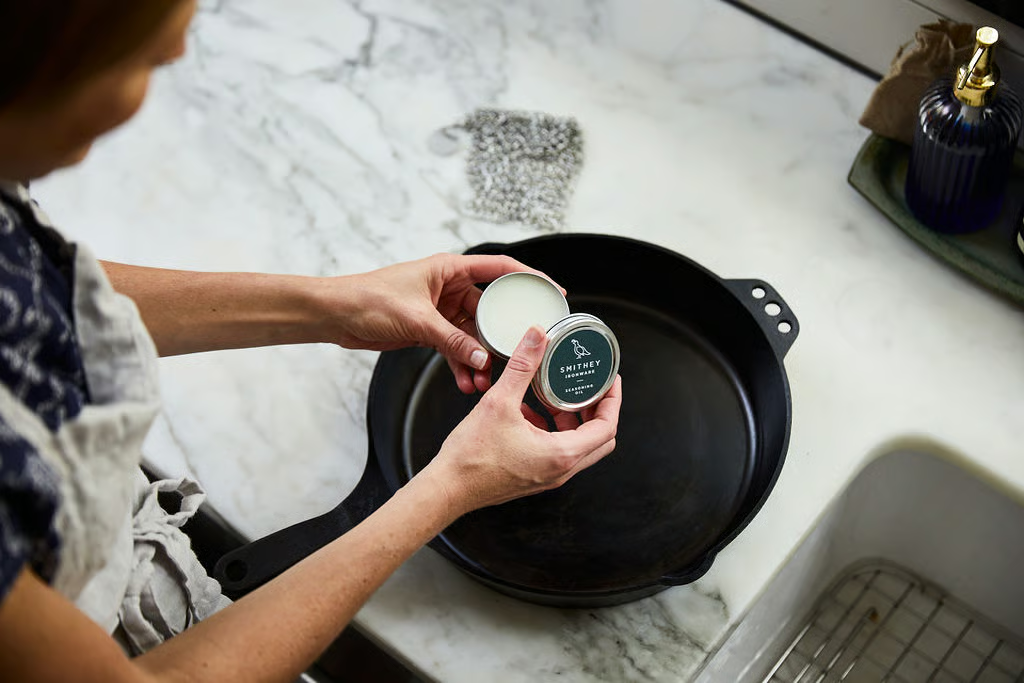
2.APPLY A (VERY) THIN COAT OF OIL
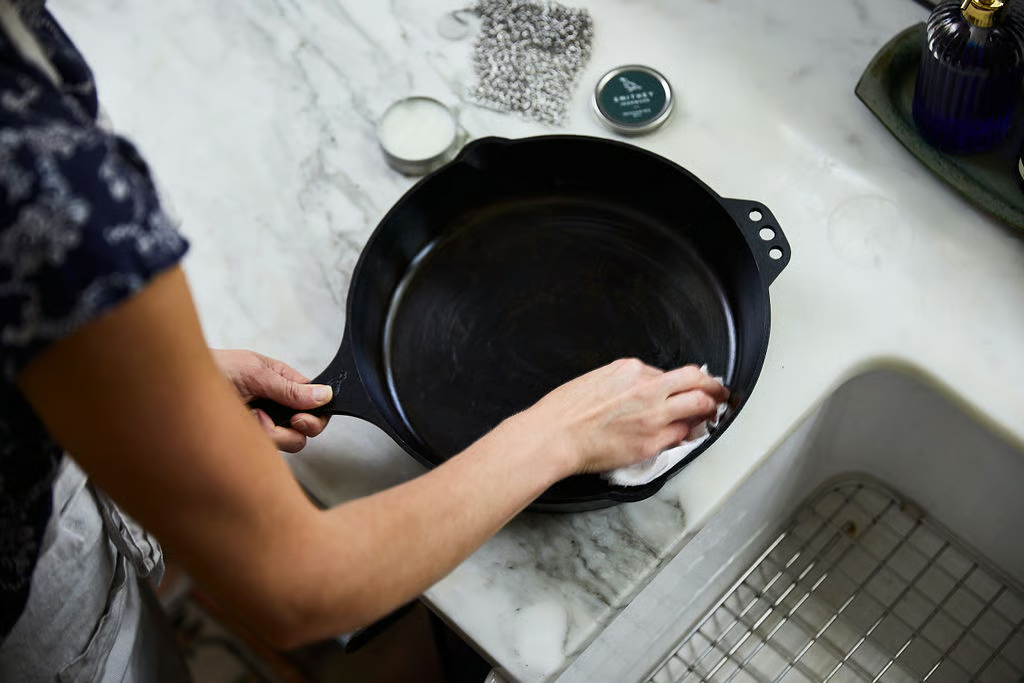
Here’s the important part. Take about a teaspoon amount of a high smoke-point, neutral oil (we at Airuipai pre-season ours with grapeseed oil, but avocado oil, sunflower oil or even beef tallow will work well). Using a paper towel, rub the oil all over the cook surface of the skillet. Now wipe off all the excess oil. The pan should not look wet or reflective; it should be just barely shiny – like a very thin sheen. Remember, less oil is more when seasoning. If you leave too much, the oil can pool and turn sticky or gummy instead of forming a smooth coat. So wipe, wipe, wipe until it looks almost dry and thin layer of oil is left behind.
3.HEAT THE PAN GRADUALLY
Place the oiled skillet on your stove-top burner. It’s best to use medium heat at first. Let the pan warm up slowly for a few minutes. Gradually increase the heat to medium-high. The goal is to get the pan hot enough that the oil reaches its smoke point – when you see faint wisps of smoke rising from the skillet’s surface. Don’t crank the heat to max right away; a slower heat helps the oil bond evenly (also, super high heat can actually burn off existing seasoning, which we don’t want). As the pan heats, occasionally wipe it again with a clean dry paper towel to catch any excess oil that might rise. Be careful! If things get too hot to touch, use a pair of tongs to hold the paper towel.
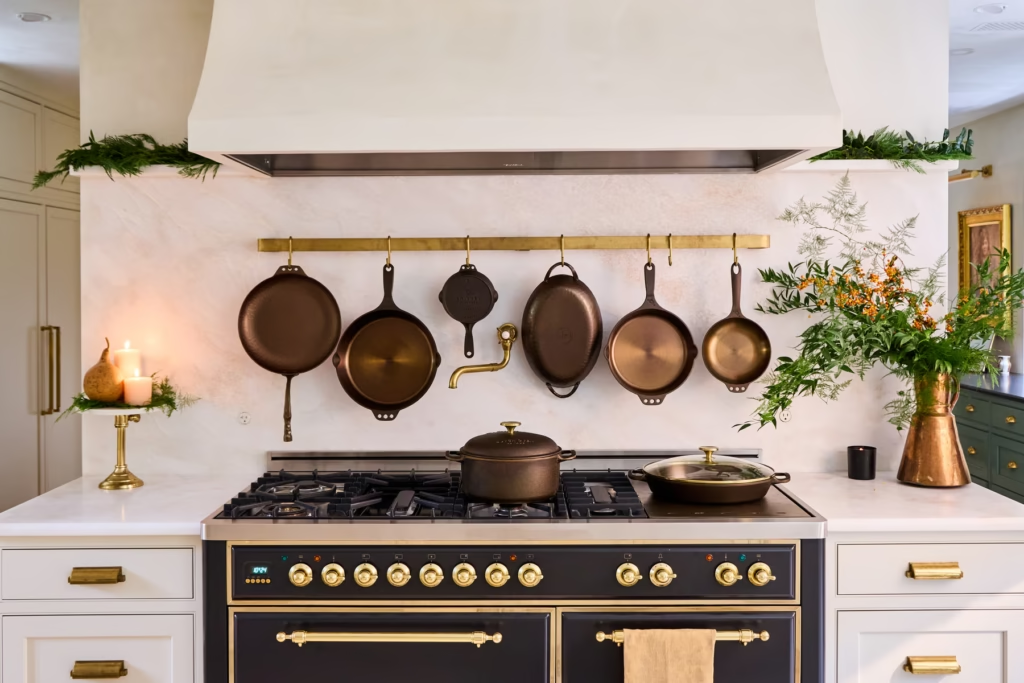
4.LET IT SMOKE
Once the skillet starts to smoke, it’s the magic moment. Keep the heat at the smoke point for about 60-90 seconds. This is when the oil is transforming into a hardened protective layer (a process called polymerization). You’ll notice the surface might turn from brownish to dark brown or even black, as the thin oil film bonds to the metal. Tip: turn on an exhaust fan or open a window during this step, to prevent smoke from building up inside.
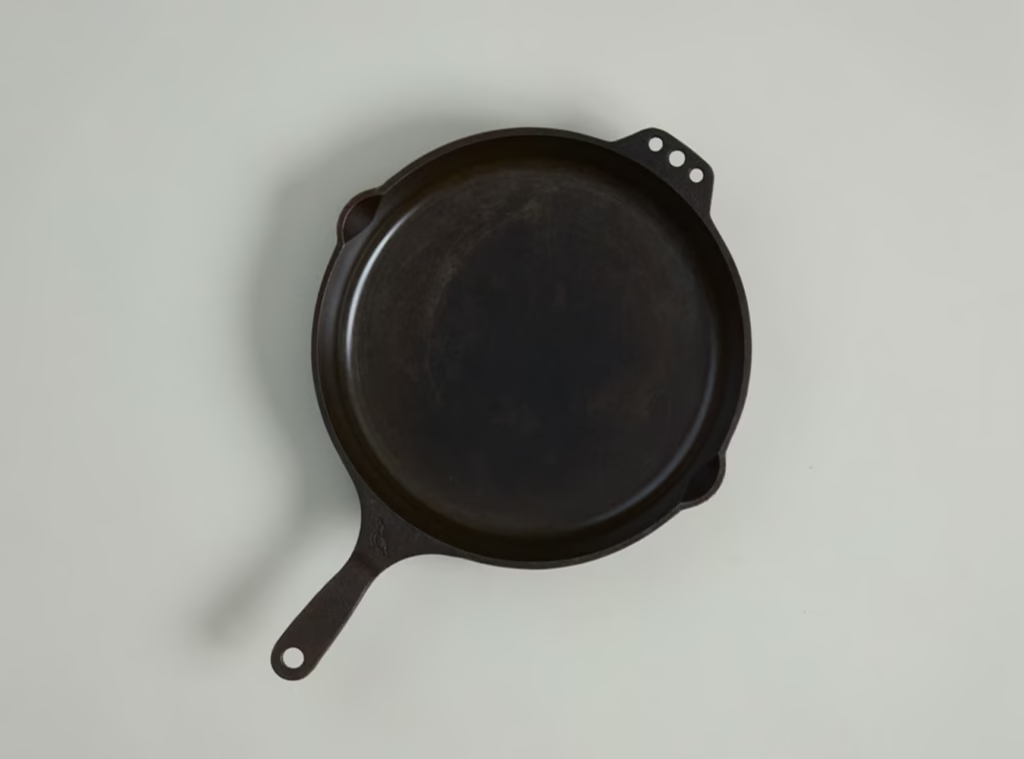
5.COOL DOWN AND ADMIRE
After a minute or so of smoking and wiping, turn off the burner. Leave the pan on the stove and allow it to cool down naturally. Do not splash water on it or move it to a cold surface (sudden temperature changes aren’t good for any cookware). As it cools, the new seasoning layer will harden. You’ll likely see that the skillet is a bit darker and has a dry, smooth sheen. That’s exactly what we want – the oil has baked onto the iron, forming a nice initial seasoning layer.
6.(OPTIONAL) REPEAT
One round of stove-top seasoning is enough to get your Airuipai ready for action. But if you want to build up a thicker seasoning, you can repeat steps 2-4 another time or two. Just ensure the pan has cooled back to room temperature before starting each new round. Remember to keep your oil layers super thin each time. Multiple light coats will create a more durable seasoning than one heavy coat.
7.LET'S COOK
That’s it! Your Airuipai is seasoned well and ready to use. At this point, the surface will already be semi-nonstick, and it will only get better the more you cook. In fact, the best way to build seasoning is simply to cook with your skillet regularly. Cook anything that has a bit of fat – searing meats, sautéing vegetables, etc. Each time you cook, especially with oils or fats, you’re laying down layers of seasoning that make the pan increasingly non-stick over time. So go ahead and fry up some chicken or make a juicy burger in your newly seasoned pan – your Smithey will thank you.
FREQUENTLY ASKED QUESTIONS
简而言之: 无需频繁保养。 如果爱瑞派煎锅经常使用,尤其是在烹饪油类或油脂类食物时,它会在使用过程中自然形成一层保护膜。无需严格按照时间表重新养锅——只有当您开始注意到性能问题时才需要进行养锅。
一个简单的判断方法是: 当食物比平时更容易粘锅,或者锅底出现 裸露或银色的涂层 磨损区域时,就应该重新养锅。这些迹象表明养锅层变薄或不均匀,快速修补一下就能恢复煎锅的不粘性能,并保护下面的铁质锅体。
如果需要重新养锅,方法很简单:清洗并擦干锅,涂抹 一层极薄的高烟点食用油,加热至冒烟。待其冷却后,就完成了一层新的养锅。加热前务必 擦去多余的油, 以免锅底粘锅。
否则,继续烹饪!只要经常使用并妥善保养(彻底擦干、妥善存放,以及避免早期烹饪过酸或过低脂的食物),你的爱瑞派就会随着时间的推移自然地保持并改善其养护效果。
酸性食物会毁了我的调味料吗?
没错,像番茄、醋、柑橘类水果和葡萄酒这类酸性食材,如果锅具没有做好充分的养护,确实会破坏锅具的养护层。但这并不意味着你就要放弃你最爱的番茄酱或炖菜。关键在于掌握好烹饪时间和锅具的养护程度。
如果一口煎锅已经养好了——也就是说它经常使用,表面形成一层厚厚的油膜,而且食物很容易从锅底脱落——那么偶尔烹饪一些酸性食物完全没问题。比如快速做番茄酱汁、辣椒,或者用少许葡萄酒来给锅底去油。只需避免长时间慢炖酸性食物,尤其是在新锅或养护层较薄的锅上。
对于使用新厨具或正在养锅的用户,我们建议遵循以下技巧:
在烹饪过程中,待蛋白质和脂肪充分覆盖食材表面后,再加入酸性食材。
炖煮时间要短(30 分钟以内),以减少与调味料的接触。
烹饪结束后立即清洗并重新涂油,以保持锅底的养护层。